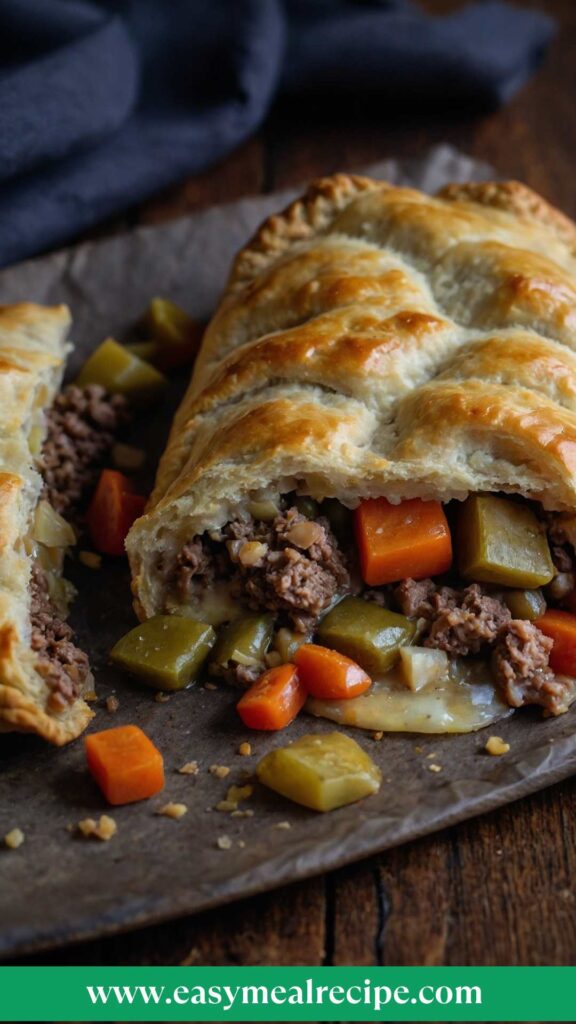
As the aroma of a freshly baked Cornish pasty fills your kitchen, you might be wondering what to serve this delightful dish with. A classic choice alongside this savory pastry is a fresh garden salad. Crisp greens, cherry tomatoes, and a light vinaigrette balance the rich, meaty flavors of the pasty perfectly.
For those who crave something heartier, consider pairing it with roasted root vegetables or a creamy potato salad. If a bit of zing is what you seek, a tangy coleslaw adds crunch and flavor.
Remember, the beauty of a Cornish pasty lies in its versatility; you can serve it with anything from a simple side of pickles to a rich gravy.
Why have I turned to Cornish pasties so often? It’s the perfect blend of crunchy crust and savory filling. My first bite took me on a delicious journey filled with nostalgic memories of Cornish holidays during my childhood.
Each pasty tells a story of tradition and nourishment. Originating from Cornwall, this handheld meal was famously taken by miners to provide them warmth and sustenance.
It's not just a meal; it’s an experience. The satisfaction that comes with biting into the crisp pastry, followed by the burst of flavors from the filling—it's something everyone should enjoy.
The recipe I’m sharing is manageable, making it perfect for busy individuals or anyone looking to impress guests with something homemade. Let’s get into the ingredients, shall we?
1 pound waxy potato, peeled and diced into 1/4-inch cubes
Salt and freshly ground black pepper, to taste
6 ounces yellow onion, finely chopped
1 pound beef skirt steak or sirloin, cut into small cubes
1 small clove garlic, minced
Unsalted butter, for brushing
8 ounces rutabaga, peeled and cut into 1/4-inch cubes
1 large egg, beaten
Plain flour, for dusting
Making Cornish Pasty: Step-by-Step Instructions
Step 1: Prepare the Pastry
After gathering all my ingredients, I start by making the pastry. The secret to a great pasty starts here. In a large bowl, combine the plain flour and sea salt. Next, I add in the cold lard and butter. Using my fingers, I rub them in until it resembles breadcrumbs.
Then, I gradually mix in the sparkling water and apple cider vinegar until the dough forms a ball.
Cover the dough with cling film and refrigerate for at least 30 minutes. This helps create that flaky texture we adore.
Step 2: Prepare the Filling
While my pastry is chilling, I turn my attention to the filling. I peel and dice the waxy potatoes and rutabaga into small cubes. This ensures even cooking. Then, I finely chop the onion and mince my garlic.
In a large bowl, I combine the potatoes, rutabaga, onion, garlic, and cubed beef. I season it with salt and freshly ground black pepper.
Mixing this filling is where my excitement builds! Each spoonful releases a medley of flavors, and it’s hard to resist tasting.
Step 3: Roll Out the Dough
Once the dough is firm, I dust my working surface with plain flour. I roll out the pastry to about 1/8-inch thickness. Using a large plate or a cutter, I create circles of dough – about 7 inches in diameter.
This is where the fun begins!
Step 4: Fill the Pasties
For each circle, I place a generous spoonful of my filling on one-half of the dough. I leave the edges clear to ensure I can seal them later. With the other half of the pastry, I fold it over the filling.
Step 5: Seal the Edges
Next, I gently press the edges together, ensuring no filling escapes. For extra assurance, I crimp the edges with my fingers, creating a decorative border.
Step 6: Prepare for Baking
I preheat my oven to 400°F (200°C). On a baking tray lined with parchment paper, I place my pasties and brush their tops with beaten egg. This step guarantees a beautiful golden finish.
Step 7: Bake
The moment of truth has arrived! Into the oven, my pasties go. I bake them for about 30-35 minutes, or until they achieve a lovely golden brown coloring. While they bake, my kitchen is filled with savory scents.
Step 8: Chill and Serve
Once baked, I let them cool on a wire rack. Cornish pasties are best served warm, but they also make a delightful picnic treat if you prepare them ahead.
Recipe Notes
Pork Lard: This is crucial for a traditional Cornish pasty. It gives the pastry its rich flavor.
Plain Flour: A must-have for structure. Using whole grain flour can change the texture.
Waxy Potatoes: Ideal for holding their shape during cooking.
Recipe Variations
Vegetarian Option: Swap the meat for lentils or mushrooms for a hearty alternative.
Different Meats: Use chicken, pork, or lamb if you prefer.
Spices: Experiment with spices such as paprika or thyme to add depth.
Nutrition Facts
Cornish Pasty Recipe Nutrition Facts
Conclusion
Cornish pasties symbolize comfort and tradition with every flaky bite. I’ve shared my journey with this delightful recipe, from gathering ingredients to the thrill of pulling them out of the oven.
With their humble origins, Cornish pasties have held their place in households around the world for good reason. They offer versatility, simplicity, and unmatched flavor.
From family gatherings to solo lunches, there’s a pasty for every occasion. That's why I encourage you to try your hand at making them. You might just find yourself crafting your own memories, one Cornish pasty at a time.
So, roll up those sleeves and start cooking; you won’t regret it!
Why have I turned to Cornish pasties so often? It’s the perfect blend of crunchy crust and savory filling. My first bite took me on a delicious journey filled with nostalgic memories of Cornish holidays during my childhood.
Each pasty tells a story of tradition and nourishment. Originating from Cornwall, this handheld meal was famously taken by miners to provide them warmth and sustenance.
Ingredients
For the Shortcrust Pastry:
5ounces cold pork lard, diced
3 1/2cups plain flour
2/3cup ice-cold sparkling water
1teaspoon fine sea salt
1tablespoon apple cider vinegar
5ounces unsalted butter, chilled and cubed
For the Cornish Pasties:
1pound 1 waxy potato, peeled and diced into 1/4-inch cubes
Salt and freshly ground black pepper, to taste
6ounces yellow onion, finely chopped
1pound beef skirt steak or sirloin, cut into small cubes
1small clove garlic, minced
Unsalted butter, for brushing
8ounces 8 rutabaga, peeled and cut into 1/4-inch cubes
1large egg, beaten
Plain flour, for dusting
Instructions
Step 1: Prepare the Pastry
1
After gathering all my ingredients, I start by making the pastry. The secret to a great pasty starts here. In a large bowl, combine the plain flour and sea salt. Next, I add in the cold lard and butter. Using my fingers, I rub them in until it resembles breadcrumbs.
2
Then, I gradually mix in the sparkling water and apple cider vinegar until the dough forms a ball.
3
Cover the dough with cling film and refrigerate for at least 30 minutes. This helps create that flaky texture we adore.
Step 2: Prepare the Filling
4
While my pastry is chilling, I turn my attention to the filling. I peel and dice the waxy potatoes and rutabaga into small cubes. This ensures even cooking. Then, I finely chop the onion and mince my garlic.
5
In a large bowl, I combine the potatoes, rutabaga, onion, garlic, and cubed beef. I season it with salt and freshly ground black pepper.
6
Mixing this filling is where my excitement builds! Each spoonful releases a medley of flavors, and it’s hard to resist tasting.
Step 3: Roll Out the Dough
7
Once the dough is firm, I dust my working surface with plain flour. I roll out the pastry to about 1/8-inch thickness. Using a large plate or a cutter, I create circles of dough – about 7 inches in diameter.
8
This is where the fun begins!
Step 4: Fill the Pasties
9
For each circle, I place a generous spoonful of my filling on one-half of the dough. I leave the edges clear to ensure I can seal them later. With the other half of the pastry, I fold it over the filling.
Step 5: Seal the Edges
10
Next, I gently press the edges together, ensuring no filling escapes. For extra assurance, I crimp the edges with my fingers, creating a decorative border.
Step 6: Prepare for Baking
11
I preheat my oven to 400°F (200°C). On a baking tray lined with parchment paper, I place my pasties and brush their tops with beaten egg. This step guarantees a beautiful golden finish.
Step 7: Bake
12
The moment of truth has arrived! Into the oven, my pasties go. I bake them for about 30-35 minutes, or until they achieve a lovely golden brown coloring. While they bake, my kitchen is filled with savory scents.
Step 8: Chill and Serve
13
Once baked, I let them cool on a wire rack. Cornish pasties are best served warm, but they also make a delightful picnic treat if you prepare them ahead.
Nutrition Facts
Servings 6
Amount Per Serving
Calories695kcal
% Daily Value *
Total Fat27.9g43%
Saturated Fat13.6g68%
Cholesterol124mg42%
Sodium479mg20%
Total Carbohydrate72g24%
Dietary Fiber5g20%
Sugars3g
Protein36g72%
* Percent Daily Values are based on a 2,000 calorie diet. Your daily value may be higher or lower depending on your calorie needs.
Note
Pork Lard: This is crucial for a traditional Cornish pasty. It gives the pastry its rich flavor.
Plain Flour: A must-have for structure. Using whole grain flour can change the texture.
Waxy Potatoes: Ideal for holding their shape during cooking.
Keywords:
Cornish Pasty Recipe
Mary Siegel
Registered dietitian and recipe blogger
Mary Siegel is a registered dietitian from Texas and the heart behind Easy Meal Recipe, a blog dedicated to making healthy cooking simple and enjoyable. With a background in Nutrition and Dietetics from the University of Houston, she shares easy, flavorful recipes designed for busy lives. Growing up surrounded by family and food, she now blends her love of comfort food with a focus on balanced nutrition. Outside the kitchen, Mary loves exploring farmers' markets and spending time with her family in the Texas outdoors.