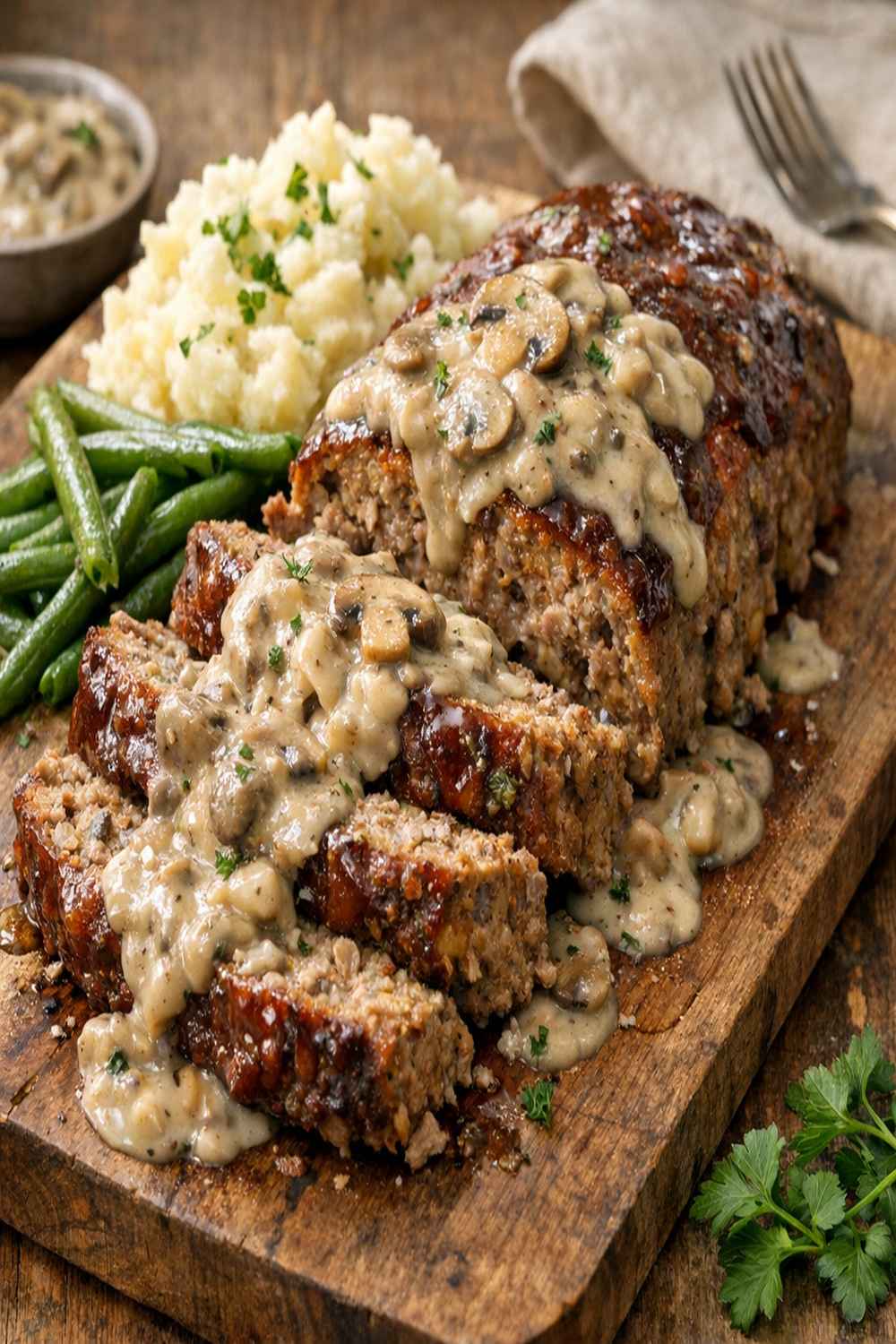

Ingredients
Method
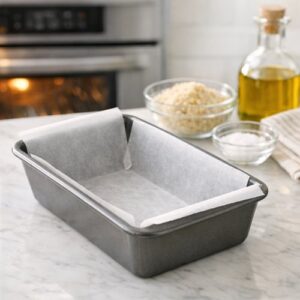
Step 1: Prepare Your Workspace and Preheat
- First things first—preheat your oven to 350°F. This gives it time to reach the exact temperature you need. While it's heating, line a 9x5-inch loaf pan with parchment paper or lightly coat it with cooking spray. Position your oven rack in the center for even heat distribution. Have all your ingredients measured and ready before you start mixing. This is called mise en place, and it's the single best habit that separates confident cooks from frustrated ones.
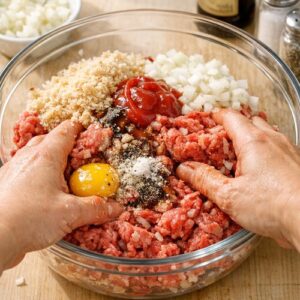
Step 2: Combine the Base Mixture
- In a large mixing bowl, combine the ground beef, egg, panko breadcrumbs, diced onion, Worcestershire sauce, ketchup, salt, and pepper. Use your hands to mix everything together thoroughly, but stop as soon as everything is incorporated. This is crucial—overworking ground beef develops too much gluten from the protein, making the meatloaf dense and tough instead of tender and moist. You're looking for a mixture that holds together when you squeeze it but still feels slightly loose. If it feels wet, add another tablespoon of breadcrumbs. If it feels crumbly, add another splash of milk (about 1 tablespoon at a time). The texture should be somewhere between wet sand and cookie dough.
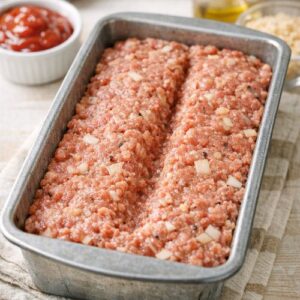
Step 3: Press Into the Loaf Pan
- Press your mixture firmly and evenly into the prepared loaf pan. Create a slight indent down the center—this helps the meatloaf cook more evenly throughout and allows excess fat to drain away from the center. Use a spatula or the back of a measuring cup to smooth the top, but don't compress it so much that it becomes dense. If you're making this ahead, you can wrap it at this point and refrigerate for up to 24 hours. When baking cold meatloaf, add 10 minutes to the first bake time.
Step 4: First Bake—The Foundation
- Place the loaf pan in your preheated 350°F oven. Bake uncovered for exactly 30 minutes. You're not looking for it to be fully cooked—you're just setting the structure and beginning the cooking process. After 30 minutes, carefully pull the pan out and check for accumulated grease. You should see a good amount pooled around the edges and bottom. Using a turkey baster or carefully tilting the pan, drain off as much of this grease as you can. This is where the recipe gets lighter without losing any satisfaction. You're removing excess fat while keeping all the flavor. Pat the top with a paper towel if you want to be extra thorough.
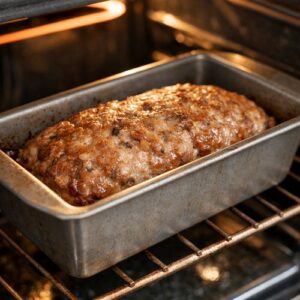
Step 5: Prepare and Apply the Cream of Mushroom Topping
- While the meatloaf is baking, prepare your topping. Pour the cream of mushroom soup into a small bowl and stir in the whole milk until you have a pourable consistency. Don't skip the milk—it prevents the topping from being too thick and creates a silky texture that distributes evenly. Taste it and add salt and pepper if needed. Once you've drained the grease from your meatloaf, pour the mushroom mixture evenly over the top. Tilt the pan gently to help it distribute, but it doesn't need to be perfect. As it bakes, it'll settle and create a beautiful creamy layer.

Step 6: Final Bake—Where the Magic Happens
- Return the meatloaf to the 350°F oven and bake for an additional 30-45 minutes. The soup topping will bubble around the edges, and you'll see it beginning to set. The meatloaf is done when an instant-read thermometer inserted into the thickest part (without touching the pan) reads 160°F. If you're unsure, err on the side of slightly longer baking. An overcooked meatloaf is forgiving; an undercooked one is not safe. At around the 35-minute mark, if you notice the top is browning more than you'd like, loosely tent it with foil.
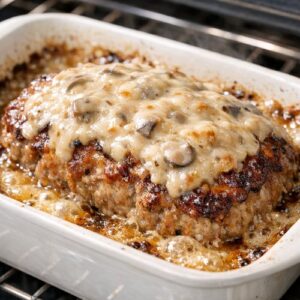
Step 7: Rest Before Serving
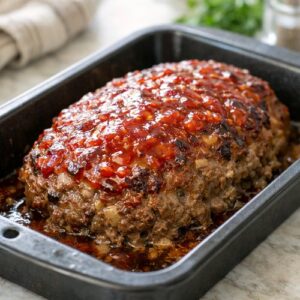
- This step matters more than you might think. Let the meatloaf rest in the pan for 5 minutes after removing it from the oven. This allows the juices to redistribute throughout the meat, ensuring every slice stays moist. If you cut into it immediately, those juices end up on the cutting board instead of in your dinner. While it's resting, get your plating situation ready. This is the perfect moment to plate your sides or garnish your serving platter.
Notes
- Skipping the drain step - I've seen people try to shortcut this, and the result is a greasy, heavy meatloaf sitting in its own fat. The drain is non-negotiable. It's a 30-second step that makes the difference between mediocre and magnificent.
- Overmixing the meat - The moment you feel resistance when mixing, you're done. Overmixed meatloaf becomes tough and dense instead of tender. This is the most common mistake I see, and it's so easy to fix once you know about it.
- Not using enough breadcrumbs - The breadcrumbs aren't filler; they're a binder that keeps moisture in the meat. Too few breadcrumbs and your meatloaf becomes dense and dry. Too many and it becomes spongy. The ½ cup is dialed in.
- Forgetting to let it rest - Those 5 minutes matter enormously. Cut into it immediately and the juices escape. Let it rest and every slice stays moist. Patience here pays dividends.