

Ingredients
Method
Step 1: Preheat Your Oven and Prep Your Ingredients
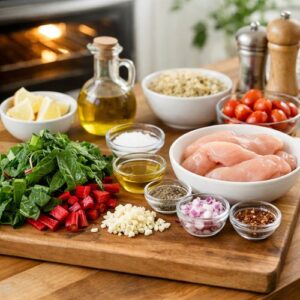
- Set your oven to 400°F and let it warm while you prep everything else. This is absolutely critical—starting with a properly preheated oven ensures your chicken finishes cooking at the right pace and the sauce bubbles gently instead of aggressively. While the oven heats, do your mise en place (that's a fancy way of saying "get everything ready"). Tear your chard into bite-sized pieces—don't stress about perfect sizing; rough chunks are actually what you want here. Peel and smash your garlic cloves with the flat side of your knife (this breaks down the cell walls and releases more flavor), then roughly chop them into smaller pieces. Have your cream, broth, Parmesan, and lemon juice within arm's reach. Measure everything now so you're not hunting through your fridge mid-cook. Pat your chicken thighs completely dry with paper towels. This might seem fussy, but dry skin crisps better than wet skin. You're creating the conditions for a golden, crunchy exterior that stays that way even under sauce.
Step 2: Sear the Chicken Thighs Until Golden and Crispy
- Place your large skillet over medium-high heat. Add the 1 tablespoon of salted butter and 1 tablespoon of vegetable oil together. Let them heat until the butter is foaming and the oil shimmers—this takes about 1 minute. You'll know it's ready when you hold your hand 6 inches above the pan and feel serious heat. Carefully place your four chicken thighs skin-side down into that hot skillet. Do not move them. This is crucial. Your job for the next 4 to 5 minutes is to leave them alone. The skin will sizzle and pop slightly, which is exactly what you want. That sound is the Maillard reaction happening—basically, the proteins and sugars in the chicken skin are caramelizing into flavor compounds. If you keep moving them, this can't happen. After 4 to 5 minutes, peek underneath one thigh with your spatula. The skin should be deep golden brown, almost mahogany colored. If it's still pale, give it another minute. When you're happy with the color, flip each thigh and sear the other side (the meaty side) for about 3 to 4 minutes until it's golden too. Here's where we diverge from the traditional approach: instead of draining all the fat, I'm going to transfer these chicken thighs to your 8x8-inch baking dish and leave most of that flavorful fat in the pan. It's going to form the foundation of your sauce. Pour off about half the fat if it looks like a pool, but don't go crazy trying to get it completely clean.

Step 3: Build Your Garlic-Chard Foundation
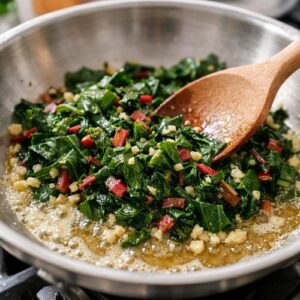
- Return that same skillet to medium heat. Add the 2 tablespoons of butter if you'd like extra richness, or skip it if you feel you have enough fat in there already. Add your smashed and chopped garlic all at once. Stir constantly for exactly 1 minute. You're listening for a gentle sizzle and smelling for that intoxicating garlic aroma. If you let it go longer than a minute, it'll burn and taste bitter—so watch that timer. Now add all your torn chard at once. This will look like an impossible mountain of greens. Don't panic. Stir it with your wooden spoon, and within 60 seconds, it'll begin to wilt. Keep stirring for another 2 to 3 minutes until the leaves are soft and the stems are tender. The chard should be completely wilted and darkened in color—going from bright green to more of a deep forest green.
Step 4: Create Your Silky Cream Sauce
- Pour in your 1 cup of chicken broth. Stir well, making sure to scrape up any browned bits stuck to the bottom of the pan—those bits are pure flavor. Let this simmer for about 2 minutes so the chard gets tender all the way through and the flavors begin to marry. Pour in your ¼ cup of heavy cream and immediately stir. Then add your ⅓ cup of freshly grated Parmesan, stirring constantly. The sauce should begin to thicken and turn creamy. It might look slightly grainy at first, but that's okay. Keep stirring gently for another 1 to 2 minutes until it becomes silky and smooth. The Parmesan needs time to fully incorporate. Taste it. Now add your ½ teaspoon of lemon juice and stir. Taste again. Does it taste bright and balanced? If not, add a bit more lemon or a small pinch of salt. This is where you make it yours—trust your palate.

Step 5: Combine Chicken and Sauce, Then Into the Oven
- Pour that glorious creamy chard mixture over your seared chicken thighs in the baking dish. Gently stir to make sure the sauce surrounds each piece of chicken. The chicken should peek through the top, and the sauce should pool around it. Slide the baking dish into your preheated 400°F oven. Set a timer for 25 to 30 minutes. Your chicken is done when a meat thermometer inserted into the thickest part of a thigh (not touching bone) reads 185°F. If you don't have a thermometer, a fork should pierce the meat easily without resistance. While it's baking, you might pour yourself something nice, call a friend, or just breathe knowing that your dinner is taking care of itself.

Step 6: Rest and Serve
- Remove the baking dish from the oven. It will be bubbling gently around the edges. Let it rest for 3 to 5 minutes—this allows the chicken to relax and reabsorb its juices, keeping it tender rather than stringy. Carefully transfer each chicken thigh to a plate with a large serving spoon, and divide that creamy chard mixture equally among servings. The sauce should cling beautifully to everything.
Notes
- 2 tablespoons butter (for the sauce; same salted butter is fine here too)
- Sea salt and cracked black pepper (to taste—probably ¼ teaspoon of each, but you'll adjust as you build flavor)
- 1 tablespoon vegetable oil (canola, sunflower, or grapeseed all have high enough smoke points for this searing temperature)
- 8 cups roughly torn Swiss chard (about 2 large bunches—that's approximately 6 to 7 stems each; look for bright green leaves without yellowing or brown spots)
- 4 bone-in, skin-on chicken thighs (about 1½ to 2 pounds total—look for thighs with creamy-colored skin that doesn't look too pale or discolored)
- 1 cup chicken broth (low-sodium is my preference so you control the salt; homemade is wonderful but store-bought is perfectly acceptable)