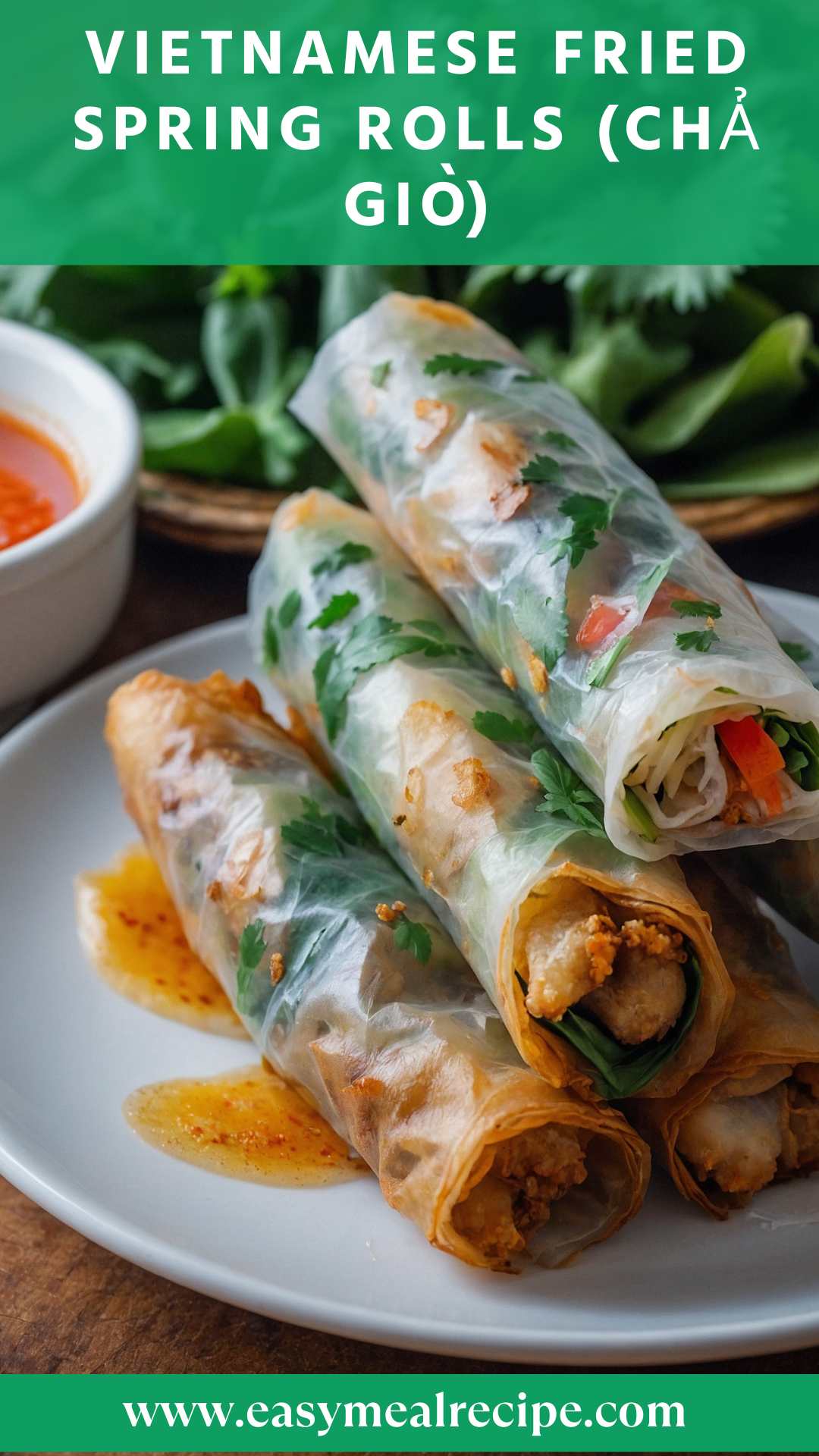
Ingredients
Method
- Let’s get into the nitty-gritty of making these delicious spring rolls. Rolling them can be an art form, but don’t worry. I’ll guide you through each step.
Step 1: Prepare the Filling
- Start by soaking the dried glass noodles in warm water for about 15 minutes. Once they soften, drain and chop them into smaller pieces. This helps distribute them throughout the filling.
- In a large bowl, combine the ground pork, chopped glass noodles, green onion, grated ginger, salt, sugar, julienned carrot, dried wood ear mushrooms (previously soaked and chopped), black pepper, and minced shallots. Mix everything well. The goal here is to create a cohesive filling that melds together beautifully.
Step 2: Prepare the Wrappers
- If you’re using rice paper wrappers, soak them in warm water for about 15-30 seconds until pliable. Be careful not to soak them too long; that can lead to a sticky mess. If you’re using wheat-based wrappers, follow the package instructions.
- Once they’re ready, lay them out on a clean surface. It’s best if you have a damp cloth beneath to keep them from sticking.
Step 3: Fill the Rolls
- Place a heaping tablespoon of filling on the lower third of the wrapper. Fold the sides over and then roll it tightly from the bottom up. Don’t roll too tightly, as you want some room for expansion during frying. Repeat this with the remaining filling.
Step 4: Heat the Oil
- In a deep pan, heat about ½ cup of neutral cooking oil over medium-high heat. To test if the oil is hot enough, drop in a small piece of a spring roll wrapper. If it sizzles immediately, you're ready to fry.
Step 5: Fry the Rolls
- Carefully place a few rolls in the hot oil, ensuring not to overcrowd the pan. Fry them until golden brown, about 3-5 minutes, turning occasionally for even cooking. Remove and let them drain on a paper towel-lined plate.
Step 6: Prepare the Dipping Sauce
- In a small bowl, mix the sugar with garlic, fish sauce, chili, warm water, and lime juice. Stir until the sugar is dissolved. Taste and adjust seasoning if necessary. This sauce should balance sweet, salty, and tangy flavors.
Notes
To ensure your Chả Giò come out perfectly, here are some handy tips:
- Avoid Overfilling: A little goes a long way. Overfilling can result in leaks during frying.
- Temperature Control: Maintain the oil temperature; too cool will lead to soggy rolls, while too hot will burn the outside and leave the inside raw.
- Experiment with Fillings: Don’t hesitate to add more vegetables or change up the protein. Shrimp or chicken work well with the same spices.
- Refrigerate Before Frying: Let the assembled rolls chill in the fridge for 20-30 minutes. This helps set the filling and makes them easier to handle.
- Storage Tips: If you don’t fry all the rolls at once, keep the un-fried spring rolls covered with a damp cloth to prevent them from drying out.