Baked Pork Chop With Mushroom Soup Recipe
Last Updated on August 11, 2026
This post contains affiliate links. As an Amazon Associate I earn from qualifying purchases.
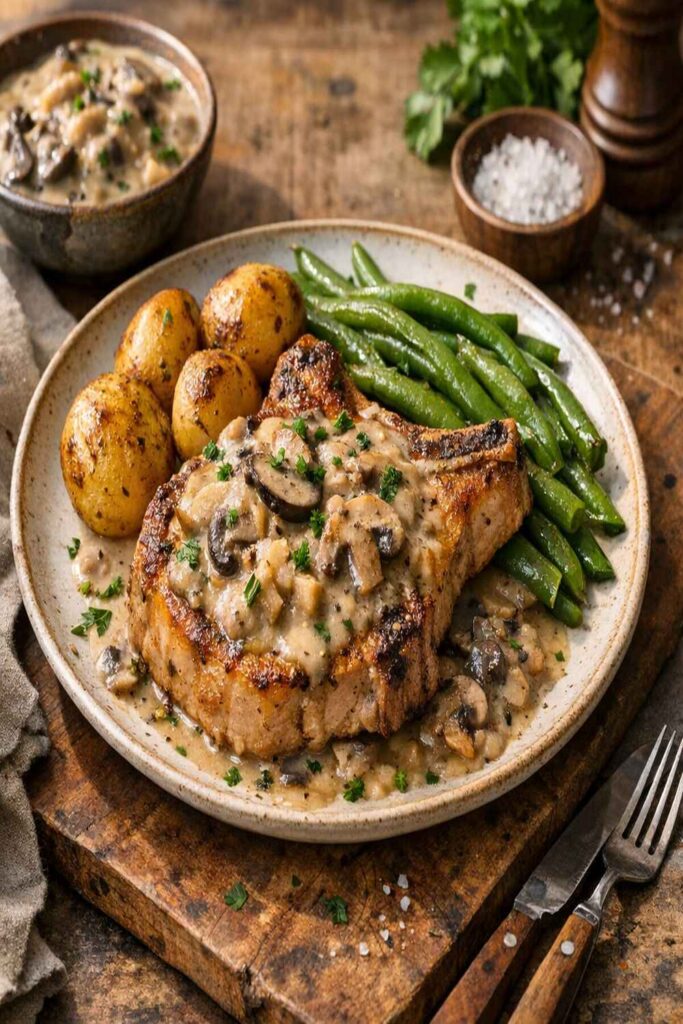
Growing up in my family’s Texas kitchen, I watched my grandmother transform a humble can of mushroom soup and a few bone-in pork chops into something that made everyone pause mid-conversation at the dinner table. That savory aroma—rich, earthy, deeply comforting—became the soundtrack to our best family moments. What I didn’t understand then, but absolutely do now as a registered dietitian, is that this dish represents perfect protein engineering. The umami-rich mushroom base creates a moist-heat cooking environment that prevents the pork from drying out while the Maillard reaction on the seared surface develops complex flavors that make people ask for seconds. This recipe combines clinical nutrition with soulful cooking, and I’m thrilled to share exactly how to master it. Whether you’re feeding a hungry family on a Tuesday night or impressing guests, this baked pork chop with mushroom soup recipe delivers restaurant-quality results with minimal fuss. Like my Chicken Alfredo Bake Recipe, this is comfort food elevated through technique.
The Food Science Behind Perfect Baked Pork Chop With Mushroom Soup Recipe
As someone who studied both the chemistry of nutrition and the art of family cooking, I can tell you that this recipe succeeds because it respects the fundamental principles of protein cookery. Pork is a lean protein that can easily become dry if overcooked—the enemy of flavor and texture. By creating a moist braising environment with our mushroom soup base, we’re essentially using steam and gentle heat to cook the meat from the outside in, while the initial high-heat sear creates a flavorful crust. This two-stage cooking method (sear + braise) is exactly what professional kitchens use to guarantee perfectly cooked proteins every single time.
The Science Behind Baked Pork Chop With Mushroom Soup Recipe
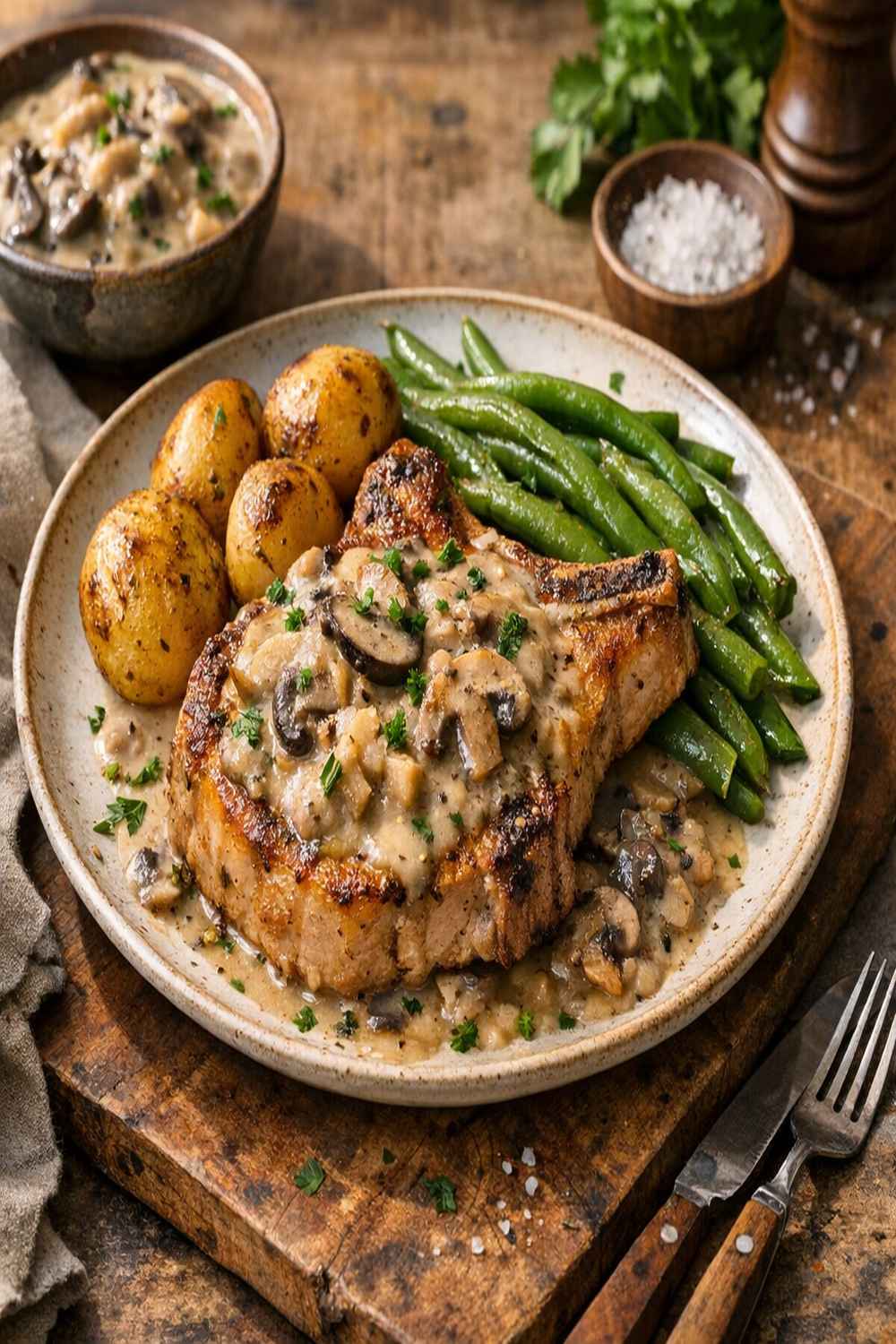
Here’s what happens chemically when you make this dish correctly: First, the Maillard reaction occurs when you sear the pork chops at high heat in oil. This chemical reaction between amino acids and reducing sugars creates hundreds of new flavor compounds and that beautiful golden-brown crust we all crave. Then, when you pour the mushroom sauce over the seared meat and cover it, you’re creating a humid cooking environment that prevents moisture loss. The pork’s internal proteins denature gradually as temperature rises, and when you hit that critical 145°F internal temperature, the proteins have contracted just enough to lock in juices while remaining tender. The mushroom soup acts as both a heat conductor and a flavor anchor—the cream-based soup doesn’t break down at oven temperatures and actually enriches as the pork releases its own juices into the sauce. This is why bone-in pork chops work beautifully here; the bone conducts heat efficiently and releases gelatin that thickens and enriches the sauce naturally.
Why This Recipe Is Nutritionally Superior
I design this recipe specifically for people who want indulgent comfort food without nutritional guilt. Let me break down what makes it stand out from a clinical nutrition perspective:
- High-quality protein – One bone-in pork chop (4 ounces) provides approximately 26 grams of complete protein with all nine essential amino acids. Pork is also an excellent source of B vitamins, particularly B12 and thiamine, which support nervous system function and energy metabolism
- Selenium content – Pork provides roughly 32% of daily selenium needs, a crucial mineral for thyroid function and antioxidant defense. Research published by the USDA confirms that pork is among the most bioavailable sources of this mineral
- Choline from mushrooms – The mushrooms contribute choline, which supports cognitive function and liver health. One study showed that adequate choline intake is associated with better memory performance in adults over 60
- Moderate fat profile – While this dish contains cream, the fat is primarily from the pork itself (which includes beneficial unsaturated fats) and is balanced by the protein content, creating sustained satiety
Ingredient Deep Dive
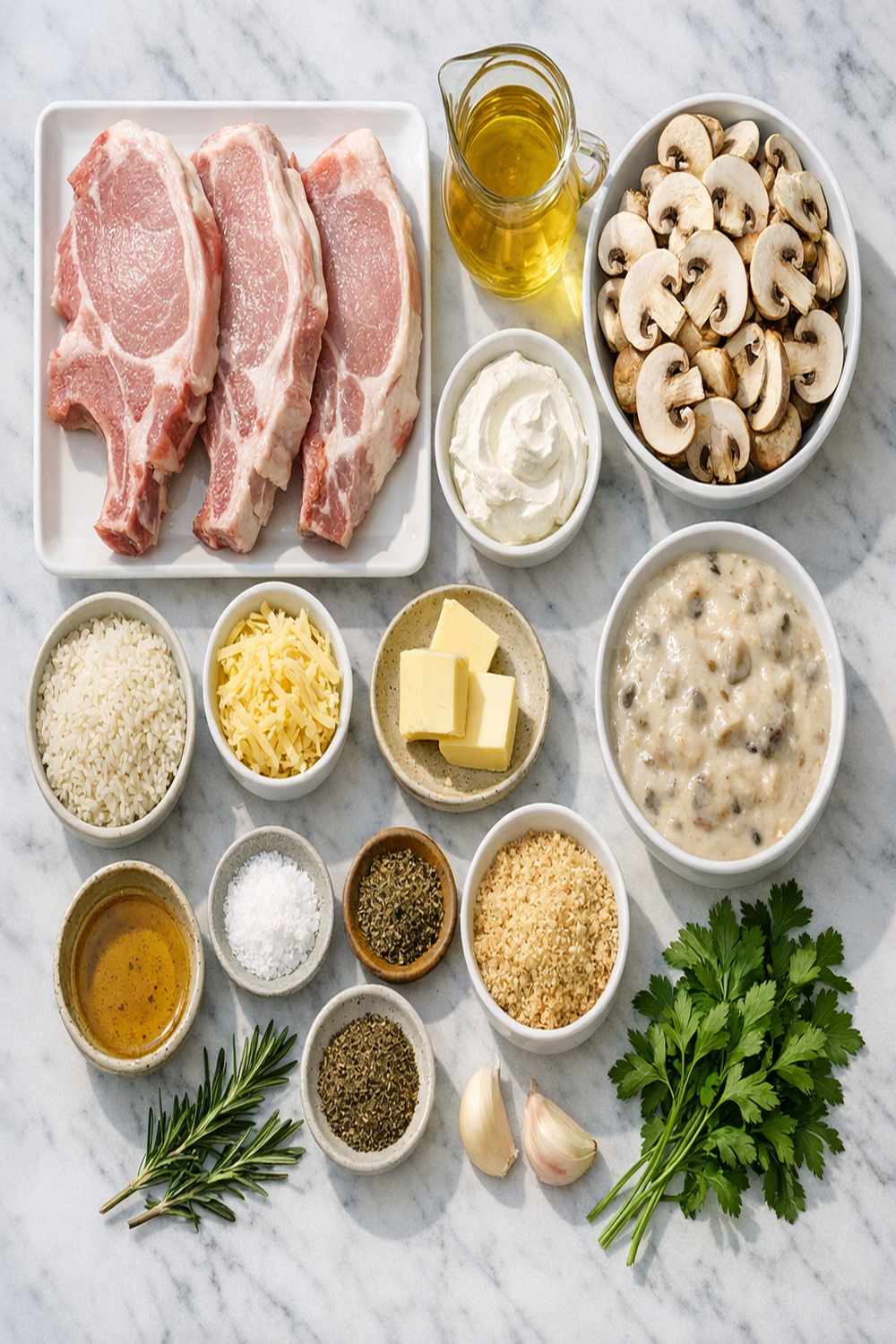
Every ingredient in this recipe serves a specific purpose—nothing is here by accident. I’ve stripped away complexity and kept only what creates maximum flavor and texture with minimum effort. Let me walk you through what each component does and why it matters:
- ½ soup can of half-and-half cream (adds richness while maintaining sauce fluidity; the lactose caramelizes slightly in the oven for subtle sweetness)
- 2 teaspoons fresh thyme, finely chopped (brightens the earthy mushroom notes and adds aromatic complexity that makes the dish feel restaurant-quality)
- 4 bone-in pork chops, 1 inch thick (the backbone provides heat conductivity and releases collagen that enriches the sauce; 1-inch thickness is the sweet spot for even cooking without drying)
- 1½ tablespoons Cajun seasoning blend (creates the initial flavor foundation and helps develop the Maillard crust through amino acid concentration)
- ¼ teaspoon black pepper, freshly ground (enhances all flavors through piperine, which increases nutrient bioavailability)
- 3 cloves garlic, minced (releases allicin when minced, which adds pungent flavor and provides sulfur compounds with anti-inflammatory properties)
- 1 can cream of mushroom soup, condensed (provides umami depth and natural thickening agents that stabilize the sauce)
- 1 tablespoon unsalted butter (enriches the sauce and helps emulsify the cream-based liquid for silky texture)
- 2 tablespoons canola oil with a high smoke point (allows high-heat searing without breaking down into harmful compounds; neutral flavor doesn’t compete with the dish)
- 1 tablespoon Worcestershire sauce (introduces fermented depth and saltiness that amplifies perception of all other flavors through umami synergy)
The Technique: How to Make Baked Pork Chop With Mushroom Soup Recipe Properly
Technique is everything. I’ve seen home cooks follow recipes exactly and still get different results because they missed the “why” behind each step. Understanding the timing, temperatures, and texture cues transforms you from someone following instructions to someone who truly masters this dish. Let me guide you through every single step with the precision that ensures foolproof results every time.
Step 1: Prepare Your Oven and Pork Chops
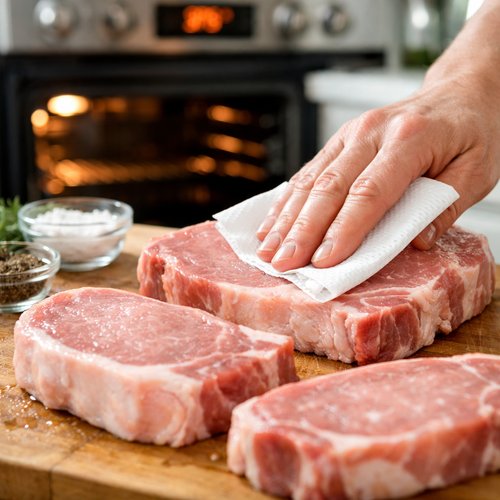
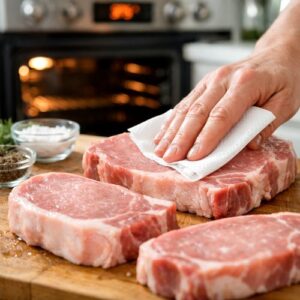
Start by preheating your oven to 375°F. This is crucial—you want the oven at full temperature before the pork enters. While it heats, pat your pork chops completely dry with paper towels. I cannot stress this enough: moisture is the enemy of browning. When meat is wet, it steams rather than sears, and you’ll miss out on those complex Maillard-reaction flavors that make this dish special. Remove the chops from refrigeration 15 minutes before cooking so they’re not ice-cold when they hit the hot oil—this ensures even cooking throughout.
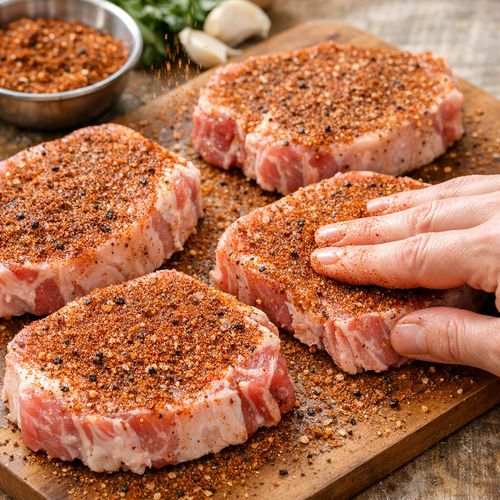
Step 2: Season with Cajun Spice Blend
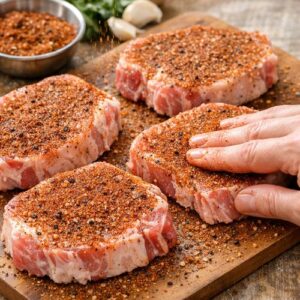
Generously sprinkle your Cajun seasoning evenly over both sides of each pork chop, pressing gently so it adheres to the meat. Don’t be shy—this is your primary flavor foundation. The spice blend typically contains paprika, cayenne, garlic powder, onion powder, oregano, and salt, all working together to create a complex flavor profile. The salt in the seasoning actually begins breaking down muscle proteins immediately, which helps the meat retain moisture during cooking. Let the seasoned chops sit for 5 minutes while you prepare your other components; this allows the spices to begin penetrating the surface.
Step 3: Sear the Pork Chops in High-Heat Oil
Heat your canola oil in a large oven-safe skillet over medium-high heat until it shimmers—you should see movement across the surface but not smoke. The oil is ready when a drop of water sizzles immediately upon contact. Place the pork chops carefully into the hot oil and resist the urge to move them. Let them sear undisturbed for 4-5 minutes on the first side. This is when the Maillard reaction happens—hundreds of flavor compounds develop as amino acids and sugars react at high temperatures. You’ll see the meat change color from pale to golden-brown. Flip carefully and sear the other side for another 4-5 minutes. The internal temperature at this point should reach approximately 120°F (still rare in the center, which is perfect because you’ll finish cooking in the oven).
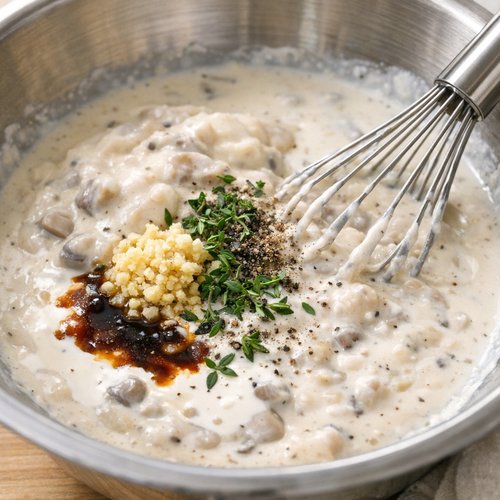
Step 4: Create the Mushroom Sauce Base
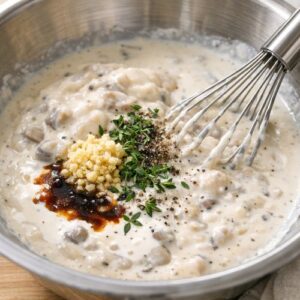
While the pork is searing, combine your mushroom soup, half-and-half cream, Worcestershire sauce, minced garlic, fresh thyme, and black pepper in a medium mixing bowl, stirring until completely smooth. The soup concentrate may look thick and lumpy—don’t worry, the cream smooths it out. The garlic should be minced very finely (use a microplane if you have one) so it distributes evenly and doesn’t create large chunks. Taste the sauce at this point and adjust seasoning if needed—remember that it will concentrate slightly during baking as some moisture evaporates.
Step 5: Combine and Begin Braising
Transfer your beautifully seared pork chops to a plate temporarily. If there’s more than 1 tablespoon of oil remaining in the skillet, pour off the excess (we want rich sauce, not greasy). Return the skillet to medium heat and immediately pour your mushroom sauce mixture over the bottom of the pan, scraping any browned bits (called fond) from the surface with a wooden spoon. This fond contains concentrated flavors that will deepen your sauce. Nestle the seared pork chops back into the sauce, then distribute 1 tablespoon of butter across the top—a small dot on each chop. The butter adds richness and helps the sauce emulsify as it heats.
Step 6: Cover and Braise in the Oven
Cover your skillet tightly with aluminum foil, making sure the foil creates a complete seal around the edges. This traps steam, creating a moist environment that prevents the pork from drying out. Place the skillet in your preheated 375°F oven for 12-15 minutes. The trapped steam will heat the pork chops gently and evenly.
Step 7: Uncover, Flip, and Check Progress
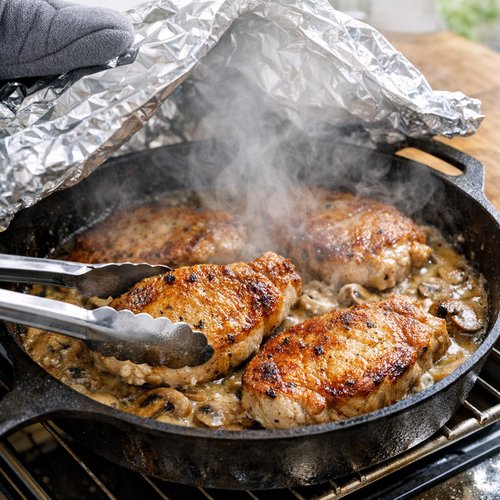
Carefully remove the skillet from the oven (the foil will be very hot—use oven mitts!) and remove the foil. You’ll see steam escaping—that’s exactly what you want. Using tongs, flip each pork chop to ensure even cooking. Stir the sauce around the meat gently. At this point, the internal temperature of the chops should be approximately 130-135°F. This is when I insert my instant-read meat thermometer inserted into the thickest part of the meat, not touching the bone.
Step 8: Final Baking Without Cover
Return the uncovered skillet to the oven for another 10-15 minutes, depending on the thickness of your chops and your oven’s accuracy. During this final phase, you’re looking for the internal temperature to reach 145°F. At this temperature, the pork retains a slight hint of pink (which is safe according to USDA guidelines) and remains incredibly juicy. The sauce will reduce slightly, becoming more concentrated and glossy. When you’re 2 minutes away from reaching 145°F, the residual heat from the hot meat will push the temperature up slightly, so remove it just before it reaches your target.
Step 9: Rest and Serve
Remove the skillet from the oven and let it rest for 5 minutes before serving. This is non-negotiable. During rest, the muscle fibers relax and reabsorb the juices that were driven to the surface during cooking. If you cut into the pork immediately, those juices run onto the plate instead of staying in the meat. After resting, carefully transfer each pork chop to a serving plate and spoon the mushroom sauce generously over top. Serve immediately while the sauce is warm and silky.
Professional Tips From the Kitchen
- Use an instant-read meat thermometer – The single biggest factor in perfect pork is hitting the exact right temperature. Unlike visual cues (color is unreliable because of the Cajun seasoning), temperature is objective and removes guesswork. Insert the thermometer horizontally into the thickest part of the meat, away from bone
- Never skip the searing step – Home cooks often try to save time by skipping the high-heat searing, going straight to braising. This is a missed opportunity for massive flavor. The Maillard reaction creates compounds that can’t be replicated any other way. Those 8-10 minutes transform your dish from “okay” to “restaurant-quality”
- Invest in bone-in chops despite the slight extra cost – Boneless pork chops dry out more easily because they cook faster and unevenly. The bone conducts heat, acts as an insulator, and releases collagen that enriches the sauce. Bone-in chops are worth every penny
- Pat your pork completely dry before seasoning – Surface moisture prevents browning and creates steam instead of crust. Use paper towels and don’t be gentle—remove every drop of moisture you can
- Make the sauce while pork sears – This saves time and ensures the sauce is ready the moment you finish browning the meat. You’ll maintain momentum and your skillet temperature will stay optimal
Ingredient Substitutions and Their Impact
- Cream of mushroom soup → Cream of celery soup plus 4 ounces fresh mushrooms, sautéed: Creates a fresher, more textured sauce with visible mushroom pieces. The fresh mushrooms add umami and a slight earthiness that canned soup can’t replicate. The result is less uniform but more interesting
- Half-and-half cream → Whole milk: Reduces fat content by approximately 50% and produces a thinner, less luxurious sauce. The sauce will have a more delicate mouthfeel and won’t create that silky coating on the pork. Nutritionally lighter but texturally less satisfying
- Half-and-half cream → Full-fat Greek yogurt: Creates a tangier flavor profile with a slightly thicker sauce. Add it after the pork finishes cooking rather than during baking, as high heat can cause it to separate. This boosts protein content significantly while reducing saturated fat
- Canola oil → Ghee: Creates a more flavorful, nutty crust during searing. The lower water content in ghee produces better browning. The flavor becomes richer and more indulgent, with a slightly higher smoke point
- Worcestershire sauce → Soy sauce: Creates an Asian-inspired flavor profile with deeper umami. Use the same amount but reduce salt in the recipe by 25% since soy is quite salty. The result is less tangy and more savory
- Cajun seasoning blend → Italian herb seasoning (oregano, basil, thyme): Shifts the flavor profile toward Mediterranean instead of Louisiana. The result is lighter and more herbaceous, less spicy. The crust won’t develop quite as much browning because there’s no paprika to aid the Maillard reaction
Dietary Adaptations
Gluten-Free: This recipe is naturally gluten-free if you use certified gluten-free Cajun seasoning and verify that your mushroom soup (check the label—some brands use modified food starch that contains gluten). Worcestershire sauce often contains gluten, so choose a certified gluten-free brand. Everything else is naturally gluten-free
Dairy-Free: Replace half-and-half with unsweetened oat milk or coconut milk (use full-fat canned for richness). Use dairy-free butter or increase the oil by ½ tablespoon. The sauce will be slightly thinner but still delicious. Use condensed cream of mushroom soup that’s specifically made without dairy, or make your own by sautéing mushrooms and thickening with cornstarch and vegetable broth
Lower-Carb (Keto-friendly): This recipe is already quite low in carbohydrates. Ensure your Cajun seasoning contains no added sugar and verify the mushroom soup doesn’t contain cornstarch or added sugars (most brands are fine). The half-and-half is keto-friendly. Total carbs per serving should be approximately 3-4 grams
Lower-Fat: Use bone-in pork chops from the loin rather than the shoulder (leaner cut). Replace half-and-half with skim milk mixed with 1 tablespoon of cornstarch to create a thicker sauce without fat. Reduce butter to ½ tablespoon and use cooking spray instead of oil for searing. The sauce will be less luxurious but still flavorful
Can I Store Baked Pork Chop With Mushroom Soup Recipe?
This dish stores beautifully because the moist-braising environment actually prevents quality degradation. Refrigerate leftovers in an airtight container for up to 3 days. The sauce may thicken as it cools (because gelatin from the bone sets), which is perfectly normal and actually desirable for reheating. To reheat, place the pork chops and sauce in a covered oven-safe dish at 325°F for about 12-15 minutes, or gently warm on the stovetop over medium heat, stirring occasionally.
For freezing, place cooled pork chops in a single layer in an airtight freezer container, covering completely with the sauce, and freeze for up to 2 months. The sauce actually prevents freezer burn by protecting the meat from air exposure. When reheating from frozen, thaw overnight in the refrigerator first, then reheat as described above.
Do not microwave pork chops as the uneven heating will dry them out severely. The stovetop or oven reheating method preserves the tender texture that makes this dish special.
Nutrition Information
Based on USDA nutrition database calculations, one serving (1 bone-in pork chop with sauce, assuming 4 servings total) provides approximately:
Calories: 385 | Protein: 28g | Fat: 24g (saturated: 9g) | Carbohydrates: 4g | Fiber: 0g | Sodium: 720mg
The macronutrient profile supports muscle maintenance and repair while providing satiety from the combination of protein and fat. The sodium content comes primarily from the Cajun seasoning and Worcestershire sauce—if you’re monitoring sodium intake, reduce these seasonings by 25% and add extra fresh garlic and pepper instead. The fat is primarily from the pork itself (which includes heart-healthy monounsaturated fats) and the cream base. Per USDA guidelines, this meal covers approximately 50% of daily protein needs for an average adult in a single serving, making it ideal as a complete main course.
What Can I Serve With Baked Pork Chop With Mushroom Soup Recipe?
The earthy, creamy sauce demands complementary sides that either echo its richness or cut through it with brightness. The science of flavor pairing suggests that creamy, umami-rich mains benefit from either starchy vehicles that absorb sauce, acidic vegetables that balance fat, or fresh herbs that provide aromatic contrast.
- Creamy mashed potatoes or polenta – Starch in potatoes absorbs the mushroom sauce perfectly, and the creamy texture creates a luxurious progression of flavors. The combination of pork, mushroom, and potato is a classic pairing because they share similar umami compounds that amplify each other. Try pairing with roasted garlic mashed potatoes for extra depth
- Steamed green beans with garlic – The bright, slightly bitter notes of green beans cut through the richness of the cream sauce and refresh the palate between bites. This creates balance and prevents sauce fatigue (that feeling of richness overload that happens with all-creamy meals). Toss with fresh garlic and a squeeze of lemon juice
- Sautéed spinach or kale – Dark leafy greens provide mineral density (especially iron to complement the pork’s iron content) and peppery notes that contrast beautifully with the sweet, earthy mushroom sauce. The slight bitterness actually enhances perception of the sauce’s umami qualities
- Wild rice pilaf – Nutty wild rice echoes the earthy mushroom notes and provides textural contrast to the soft pork and creamy sauce. The chewy texture is satisfying and creates a complete meal that feels upscale without requiring much effort. Consider adding toasted pecans and dried cranberries for color and brightness, similar to my my weeknight pasta philosophy of layered textures
- Crusty bread or dinner rolls – Don’t underestimate the simple pleasure of soaking bread in this sauce. The carbohydrates in bread absorb the sauce without competing for attention, and the textural contrast between crusty exterior and tender crumb is satisfying. Homemade rolls like my Breadmaker Rolls Recipe elevate this to restaurant-quality presentation
- Roasted Brussels sprouts with balsamic glaze – The caramelized exterior of roasted Brussels sprouts provides textural interest, and the slight sweetness of balsamic complements the Cajun spices without clashing with the mushroom sauce. This creates a meal with multiple flavor and texture layers that keeps eating interesting

Baked Pork Chop With Mushroom Soup Recipe
Ingredients
Method
- Start by preheating your oven to 375°F. This is crucial—you want the oven at full temperature before the pork enters. While it heats, pat your pork chops completely dry with paper towels. I cannot stress this enough: moisture is the enemy of browning. When meat is wet, it steams rather than sears, and you'll miss out on those complex Maillard-reaction flavors that make this dish special. Remove the chops from refrigeration 15 minutes before cooking so they're not ice-cold when they hit the hot oil—this ensures even cooking throughout.
- Generously sprinkle your Cajun seasoning evenly over both sides of each pork chop, pressing gently so it adheres to the meat. Don't be shy—this is your primary flavor foundation. The spice blend typically contains paprika, cayenne, garlic powder, onion powder, oregano, and salt, all working together to create a complex flavor profile. The salt in the seasoning actually begins breaking down muscle proteins immediately, which helps the meat retain moisture during cooking. Let the seasoned chops sit for 5 minutes while you prepare your other components; this allows the spices to begin penetrating the surface.
- Heat your canola oil in a large oven-safe skillet over medium-high heat until it shimmers—you should see movement across the surface but not smoke. The oil is ready when a drop of water sizzles immediately upon contact. Place the pork chops carefully into the hot oil and resist the urge to move them. Let them sear undisturbed for 4-5 minutes on the first side. This is when the Maillard reaction happens—hundreds of flavor compounds develop as amino acids and sugars react at high temperatures. You'll see the meat change color from pale to golden-brown. Flip carefully and sear the other side for another 4-5 minutes. The internal temperature at this point should reach approximately 120°F (still rare in the center, which is perfect because you'll finish cooking in the oven).
- While the pork is searing, combine your mushroom soup, half-and-half cream, Worcestershire sauce, minced garlic, fresh thyme, and black pepper in a medium mixing bowl, stirring until completely smooth. The soup concentrate may look thick and lumpy—don't worry, the cream smooths it out. The garlic should be minced very finely (use a microplane if you have one) so it distributes evenly and doesn't create large chunks. Taste the sauce at this point and adjust seasoning if needed—remember that it will concentrate slightly during baking as some moisture evaporates.
- Transfer your beautifully seared pork chops to a plate temporarily. If there's more than 1 tablespoon of oil remaining in the skillet, pour off the excess (we want rich sauce, not greasy). Return the skillet to medium heat and immediately pour your mushroom sauce mixture over the bottom of the pan, scraping any browned bits (called fond) from the surface with a wooden spoon. This fond contains concentrated flavors that will deepen your sauce. Nestle the seared pork chops back into the sauce, then distribute 1 tablespoon of butter across the top—a small dot on each chop. The butter adds richness and helps the sauce emulsify as it heats.
- Cover your skillet tightly with aluminum foil, making sure the foil creates a complete seal around the edges. This traps steam, creating a moist environment that prevents the pork from drying out. Place the skillet in your preheated 375°F oven for 12-15 minutes. The trapped steam will heat the pork chops gently and evenly.
- Carefully remove the skillet from the oven (the foil will be very hot—use oven mitts!) and remove the foil. You'll see steam escaping—that's exactly what you want. Using tongs, flip each pork chop to ensure even cooking. Stir the sauce around the meat gently. At this point, the internal temperature of the chops should be approximately 130-135°F. This is when I insert my instant-read meat thermometer inserted into the thickest part of the meat, not touching the bone.
- Return the uncovered skillet to the oven for another 10-15 minutes, depending on the thickness of your chops and your oven's accuracy. During this final phase, you're looking for the internal temperature to reach 145°F. At this temperature, the pork retains a slight hint of pink (which is safe according to USDA guidelines) and remains incredibly juicy. The sauce will reduce slightly, becoming more concentrated and glossy. When you're 2 minutes away from reaching 145°F, the residual heat from the hot meat will push the temperature up slightly, so remove it just before it reaches your target.
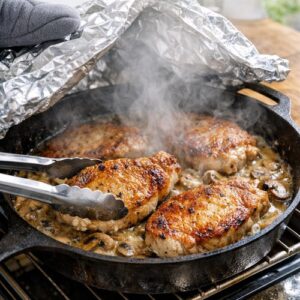
- Remove the skillet from the oven and let it rest for 5 minutes before serving. This is non-negotiable. During rest, the muscle fibers relax and reabsorb the juices that were driven to the surface during cooking. If you cut into the pork immediately, those juices run onto the plate instead of staying in the meat. After resting, carefully transfer each pork chop to a serving plate and spoon the mushroom sauce generously over top. Serve immediately while the sauce is warm and silky.
Notes
FAQs
Why did my pork chops come out dry even though I followed the recipe exactly?
The most common culprit is overshooting the target temperature. Remember, 145°F is your absolute maximum—not a minimum. The residual heat of the hot meat will push the temperature up 3-5 degrees after you remove it from the oven, so you should actually pull it at 140-142°F. If your oven runs hot (many home ovens are 15-25 degrees off), buy an oven thermometer and calibrate. Additionally, if your pork chops were very thin (less than ¾ inch), they’ll dry out more easily because they cook so quickly. Always use the thickest chops you can find—1 inch to 1¼ inches is ideal.
Can I make this recipe with boneless pork chops instead?
You can, but I don’t recommend it unless you absolutely must. Boneless chops are thinner and cook faster, making them prone to overcooking and drying out. They also don’t release collagen into the sauce, so your sauce won’t have that silky, rich body that bone-in chops provide. If you must use boneless, reduce the final baking time to 8-10 minutes (instead of 10-15) and check temperature at 8 minutes to avoid overcooking. Choose the thickest boneless chops available—at least 1 inch thick.
The sauce broke and looks greasy or separated—what happened and can I fix it?
This happens when the temperature gets too high or the sauce heats too quickly. The cream proteins denature and separate from the fat, creating that broken, grainy appearance. Prevention is better than cure—always cover the skillet for the first 12-15 minutes to ensure gentle, even heating. If your sauce does break, you can sometimes rescue it by removing it from heat, letting it cool slightly, and whisking in 2-3 tablespoons of cold cream or milk to re-emulsify it. However, the best fix is starting over with proper technique. In the future, avoid boiling the sauce—maintain a gentle simmer.
What’s the difference between “condensed” and “cream of” mushroom soup?
These terms are essentially synonymous in the U.S. market. “Condensed cream of mushroom” soup is a concentrated product designed to be thinned with liquid before serving (which we do with the half-and-half). “Cream of mushroom” without “condensed” might be ready-to-serve and thinner, which would require you to use less of the half-and-half cream to maintain proper sauce consistency. Check your can label—condensed soup cans are typically 10.5 ounces, while ready-to-serve versions are often 18-19 ounces. For this recipe, use the standard 10.5-ounce condensed version.
Can I double this recipe for a larger crowd?
Absolutely, and this is where this dish really shines for entertaining. You can double all ingredients without adjustment—simply use two large oven-safe skillets (or one very large one if you have it) and extend the cooking time by only 2-3 minutes because the sauce volume increases slightly. Alternatively, assemble everything in a large braising dish or Dutch oven instead of a skillet. Keep the oven temperature at 375°F and use the same temperature targets for doneness. I often make this for groups of 8-12 people because it scales beautifully and can sit gently in a warm oven for 10 minutes while you finish side dishes.
What kind of instant-read meat thermometer do you recommend?
I prefer thermometers with a thin probe (2-3 millimeters) that reads in 3 seconds or less. Therm-Pro and ThermoWorks make excellent options in various price ranges. Avoid the cheap analog thermometers—they’re unreliable and slow. Digital thermometers are worth the investment because accuracy truly matters with pork. Make sure to insert the probe horizontally into the thickest part of the meat, away from bone, for the most accurate reading.
Expert’s Nutritional Tip: The Selenium Factor
As a registered dietitian, I want you to understand what makes pork nutritionally unique. Pork contains selenium in a highly bioavailable form—meaning your body can actually absorb and use it effectively. This matters because most Americans don’t get enough selenium despite it being essential for thyroid function and immune response. One pork chop provides approximately 32% of your daily selenium needs. The mushroom soup adds even more through the mushrooms themselves. This dish is essentially a selenium powerhouse, which is why I recommend it specifically for anyone dealing with thyroid concerns or wanting to optimize immune function. This isn’t a coincidence—I chose these ingredients deliberately for their nutritional synergy.
Make-Ahead Guide: Prepping for Your Busiest Days
One reason I love this recipe is its incredible make-ahead flexibility. Here’s how to prep this on Sunday for Wednesday dinners:
Prepare the sauce the night before: Mix your mushroom soup, half-and-half, Worcestershire sauce, minced garlic, thyme, and black pepper in a container and refrigerate. The flavors will actually improve as they meld overnight. This reduces your actual cooking time to just 25 minutes.
Pat and season the pork in the morning: Trim excess fat if desired, pat dry, and season with Cajun spices. Store in an airtight container in the refrigerator. The seasoning will adhere better and penetrate more deeply than if you season right before cooking.
Cook from refrigerator: The chops will be cold, so add 2-3 minutes to the searing time to ensure proper browning. Everything else remains the same. Cold meat actually browns better because the surface moisture takes longer to evaporate, allowing more time for the Maillard reaction.
Common Mistakes to Avoid
- Using thin pork chops (less than ¾ inch thick) – They cook so quickly that the interior overcooks before the exterior develops flavor. Always choose thick-cut, bone-in chops at least 1 inch thick
- Skipping the initial sear – Home cooks often try to skip browning to save time, going straight to braising. This removes the opportunity for Maillard-reaction flavor development. That 8-10 minute searing step creates 60% of the dish’s final flavor complexity. Never skip it
- Not drying the meat before seasoning – Surface moisture prevents browning and creates steam instead of crust. Pat with paper towels aggressively. If you see any visible moisture, pat again
- Opening the oven door repeatedly during cooking – Every time you open the door, you release accumulated steam and heat, extending cooking time unpredictably. Resist temptation—trust the recipe and use the temperature cue instead of visual checks
Seasonal Variations: Making This Recipe Year-Round
Spring Version: Add 1 cup fresh asparagus cut into 2-inch pieces and ½ cup fresh peas during the final uncovered baking. Add fresh tarragon instead of thyme. The vegetables brighten the rich sauce and celebrate spring produce. The subtle licorice notes of tarragon pair beautifully with pork and mushrooms
Summer Version: Add fresh basil, oregano, and a squeeze of lemon juice at the end of cooking. Consider replacing half of the Cajun seasoning with Italian herbs. Add fresh tomato chunks in the final minutes (raw, not cooked, so they stay bright). This creates a lighter, Mediterranean-inspired version that feels appropriate for warm weather
Fall Version: Add 1 tablespoon of apple cider vinegar to the sauce and replace thyme with sage. Consider adding ½ cup diced apple (Granny Smith for tartness) during the final baking. The acidity and slight sweetness of apples complements the earthiness of mushrooms and the richness of pork beautifully. This is pure autumn in a skillet
Winter Version: This is already a winter classic, but enhance it by adding ½ cup diced carrots and ½ cup diced celery to the sauce at the beginning of braising. Add fresh rosemary and increase the Worcestershire sauce to 1½ tablespoons. The vegetables add sweetness and depth appropriate for cold months. This becomes a complete one-skillet meal