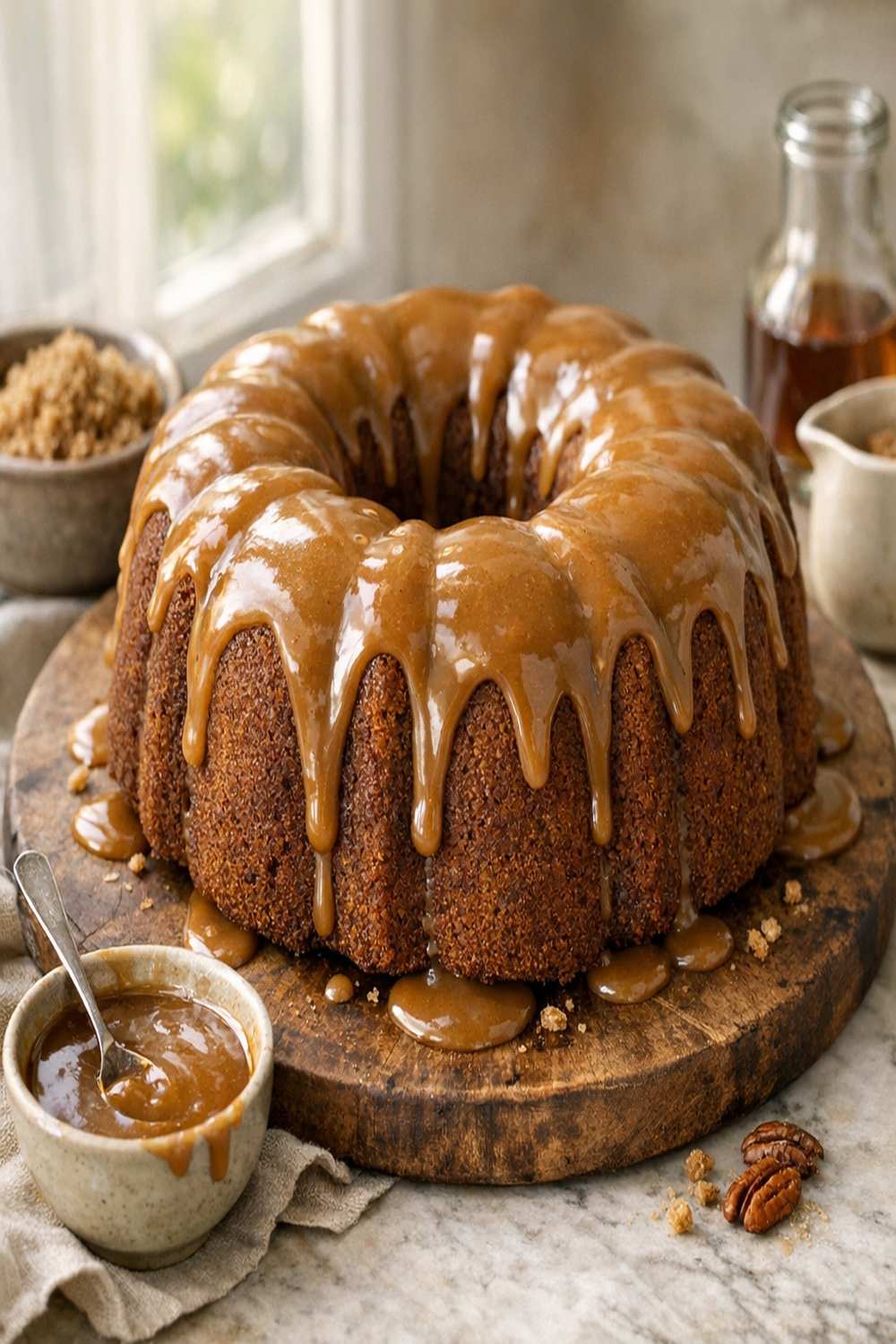

Ingredients
Method
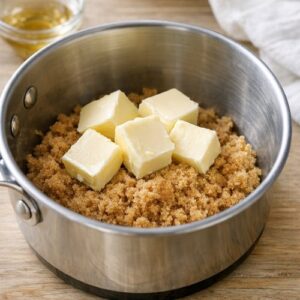
Step 1: Combine Your Base Ingredients in a Small Saucepan
- Grab a small saucepan (not a large one—this concentrates the heat and helps with even cooking). Add your 5 tablespoons of salted butter, ½ cup of packed brown sugar, and 2 tablespoons of heavy cream directly into the pan. Don't start the heat yet. This matters because combining cold ingredients first prevents splashing and helps you monitor the process from the very beginning. The cream helps the butter and brown sugar incorporate without clumping, and the salted butter adds complexity to your final glaze.
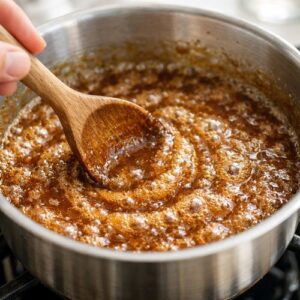
Step 2: Heat to a Low Boil Over Medium Heat, Stirring Constantly
- Turn your heat to medium and grab a wooden spoon or whisk. Stir continuously—this is non-negotiable. What you're watching for is the moment when the mixture comes to a gentle, rolling boil (not a violent, aggressive boil). This takes about 3-4 minutes. The constant stirring serves a critical purpose: it breaks down the brown sugar crystals and helps the molasses distribute evenly throughout the mixture. You'll see the mixture transition from grainy and separated to smooth and unified. Here's what success looks like: The butter melts completely, the brown sugar begins to dissolve, and the whole mixture takes on a warmer, deeper color. The aroma shifts from raw butter and sugar to something warmer and more caramel-forward. Keep your eyes on the consistency—it should look slightly thicker than when you started, with a subtle sheen.
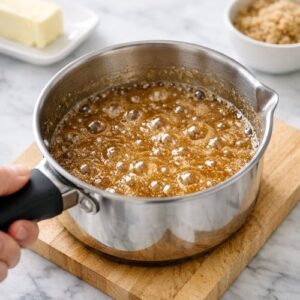
Step 3: Remove from Heat and Let Cool Briefly
- The moment you see that gentle boil, immediately remove the saucepan from heat. Don't continue cooking—you're looking for that brief boil moment, not an extended cook. Set the pan on a cool surface (not a hot burner). Now here's where patience becomes your ally: let this mixture cool for approximately 2-3 minutes. This cooling window is absolutely critical. Why? If you add powdered sugar to a mixture that's too hot, the sugar will partially melt and create a slick, grainy mess. If you wait too long (beyond 5 minutes), the mixture begins to set and thicken, making it harder to achieve that perfect glaze consistency. You're aiming for that Goldilocks moment—warm enough to be pourable, but cool enough to accept the powdered sugar gracefully.
Step 4: Whisk in the Vanilla Extract and Optional Cream of Tartar
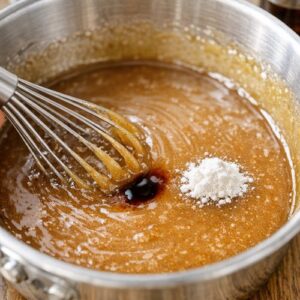
- Once your mixture has cooled for those crucial 2-3 minutes, add your ¼ teaspoon of vanilla extract and a pinch of cream of tartar (this prevents crystallization and creates a silkier finish—trust me on this). Whisk these in gently but thoroughly, making sure they're fully incorporated. The vanilla disperses quickly and adds a subtle warmth that rounds out the caramel notes beautifully. This is also where a light pinch of sea salt makes a huge difference if you choose to add it.
Step 5: Add Powdered Sugar Gradually, Whisking After Each Addition
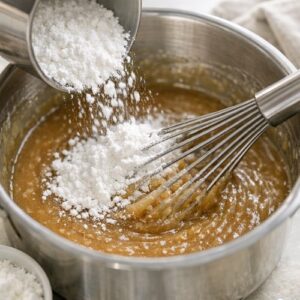
- This is the step that separates lumpy, gritty glazes from silky-smooth ones. Add the powdered sugar slowly—about a quarter cup at a time—and whisk vigorously after each addition. Watch as the powder integrates into the warm liquid, creating a perfectly smooth, lump-free mixture. After the first addition, you'll have something that looks almost like caramel sauce. After the second addition, it begins to thicken noticeably. By the third addition, you're getting close to your final consistency. The fourth and final addition brings you to the perfect glaze texture. This gradual approach takes maybe 90 seconds total, but it prevents the powdered sugar from clumping and ensures your glaze is absolutely flawless.
Step 6: Assess Your Consistency and Adjust if Needed
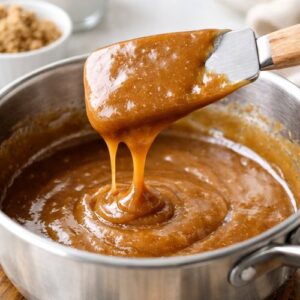
- Before you pour or spread, take a moment to evaluate what you have. For a cake topping that you'll spread with a spatula, you want a consistency that's slightly thicker—it should move slowly when you tilt the spoon but still be pourable. For drizzling over scones, muffins, or a bundt cake, you want something slightly thinner that flows more readily. If your glaze is too thick, whisk in a few drops of heavy cream or milk (literally, just 1 teaspoon at a time). If it's too thin, whisk in a tablespoon or so more of sifted powdered sugar. You control the final outcome completely here.
Step 7: Use Immediately—Your Glaze is Ready
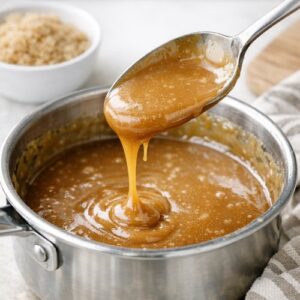
- This glaze sets quickly, which is actually a feature, not a bug. Within minutes of reaching your desired consistency, this glaze will begin to set as it cools to room temperature. If you're frosting a warm cake, the heat from the cake actually helps keep the glaze at the perfect spreadable consistency for a few extra minutes—use this to your advantage. If you're drizzling, work confidently and don't second-guess yourself. A few generous drizzles across the top of warm muffins or scones, and you're done. The glaze will set into a beautiful semi-firm coating that's neither hard nor sticky—it's absolutely perfect.
Notes
- Skipping the stirring step during heating—Home bakers often think they can just throw ingredients together and turn up the heat. The result? A separated, grainy glaze with visible brown sugar crystals that never fully dissolve. The fix is simple: don't skip that continuous stirring while bringing the mixture to a low boil. This 3-4 minute investment prevents 100% of graininess issues.
- Adding powdered sugar to a mixture that's still too hot—I see this constantly. The baker wants to work quickly and dumps all the powdered sugar in while the mixture is still steaming. The result is a slick, partially melted, grainy disaster that no amount of additional whisking can save. The solution: wait those crucial 2-3 minutes. Set a timer if you have to. That brief cooling period is everything.
- Adding all the powdered sugar at once instead of gradually—This creates lumps that are nearly impossible to whisk away, and you end up with a glaze that has a grainy mouthfeel. Always add in four stages, whisking between each addition. It takes 90 seconds and guarantees perfection.
- Using unsalted butter and wondering why the glaze tastes flat—Salted butter brings out the caramel and buttery notes far better than unsalted. It's not just about saltiness; it's about flavor complexity. Use salted butter as specified, and your glaze will taste restaurant-quality.